
Car Accident & Personal Injury Chiropractor in Sarasota
The accident is over. The injury isn’t.
Know your rights: Florida PIP law in plain English
Florida is a no-fault state. That means your own auto policy’s Personal Injury Protection (PIP) pays first for your injury-related care and lost income after a crash, no matter who caused it. Here’s what every Florida driver should know, current as of November 2026.
The 14-day rule
You must receive initial care within 14 days of the accident to use your PIP medical benefits. Miss that window and the insurer can deny PIP medical benefits entirely. A hospital, urgent care, medical doctor, or chiropractic physician all count for that first visit.
$10,000 in coverage
Every Florida vehicle owner must carry at least $10,000 in PIP. It pays 80% of reasonable, medically necessary care and 60% of lost income if your injuries keep you from working, up to your policy limit. There’s also a separate $5,000 death benefit.
$2,500 vs. $10,000: the EMC rule
To access the full $10,000, a medical doctor (MD or DO), physician assistant, nurse practitioner (APRN), or dentist must determine you had an emergency medical condition (EMC). Without that determination, insurers generally limit medical benefits to $2,500. By law, a chiropractor can provide your care but can’t make the EMC determination, so it’s worth knowing whether one was made.
Who PIP covers
You, relatives who live in your household, passengers in your car, and pedestrians or cyclists struck by your car. PIP follows your policy, so it applies whether you were driving, riding as a passenger, or walking. Massage therapy and acupuncture are not covered by PIP.
Your rights after a Florida car accident
- You choose your provider. You can see any qualified provider you choose. You aren’t limited to a list from the insurance company unless you bought a preferred-provider policy.
- Claims must be paid on time. PIP benefits are generally overdue if not paid within 30 days after the insurer gets written notice of the claim and the amount. If a claim is reduced or denied, the insurer must give an itemized explanation.
- Exams have to be reasonable. If your insurer asks for an independent medical exam, the insurer pays for it, and it must be held near where you live or receive care.
- You can see what the insurer collects. On request, the insurer must give you a copy of the information it gathered about your claim and tell you when your PIP limits have been reached.
- No one should solicit you. Nobody is allowed to pressure or pay you to see a particular provider or attorney. If that happens, Florida law says to report it to the Department of Financial Services.
- Your PIP insurer can’t place a lien on your injury settlement. And when someone else caused the crash, a claim against their insurance may cover costs PIP doesn’t.
Deadlines that matter
- Immediately: Call 911 for any crash involving injury. Florida law requires reporting it to law enforcement right away.
- Within 10 days: If police don’t write a report on a crash that requires one, you must submit a driver’s self-report to the Florida Department of Highway Safety and Motor Vehicles.
- Within 14 days: Get your initial care to keep your PIP medical benefits.
- Within 2 years: For crashes on or after March 24, 2023, most injury lawsuits against an at-fault driver must be filed within two years. If you’re found more than 50% at fault, you can’t recover damages from the other driver.
Is PIP being repealed? No. You may have seen headlines saying Florida ended no-fault in 2026. The 2026 repeal bills (SB 522 and HB 769) died in committee, and PIP is still required. We’ll update this page if the law changes.
What to do after a car accident
Save this page or text it to someone who was just in a crash. The first two weeks matter most.
- Get safe and call 911. Move out of traffic if you can, check on everyone involved, and let officers write the crash report. Ask for the report number before you leave.
- Document everything. Take photos of the vehicles, the scene, and any visible injuries. Get the other driver’s name, phone number, license plate, and insurance information, plus contact info for any witnesses.
- Get checked within 14 days, even if you feel fine. Adrenaline hides pain, and whiplash symptoms often show up days later. Your first visit within 14 days is what protects your PIP benefits.
- Know whether an EMC determination was made. If you were seen at the ER, urgent care, or by your medical doctor, ask whether they documented an emergency medical condition. That’s what opens up the full $10,000.
- Notify your own insurance company promptly. Your PIP claim goes through your policy, not the other driver’s. Stick to the facts of the crash and don’t guess about your injuries.
- Be careful with the other driver’s insurer. You don’t have to give them a recorded statement, and you shouldn’t sign a release or accept a quick settlement before you know the full extent of your injuries. Talk to an attorney first.
- Keep a paper trail. Save every bill, receipt, and letter. Track missed work, mileage to appointments, and how your symptoms affect daily life.
- Follow through on your care plan. Gaps in care are hard on your recovery, and insurers often point to them to argue you weren’t really hurt.
What to bring to your first visit
- Driver’s license or photo ID
- Your auto insurance card and claim number, if you have one
- The crash report number
- Health insurance card
- Your attorney’s name and contact info, if you’ve hired one
- Any ER, urgent care, or medical records from the crash
Questions about your situation? Call or text us at (941) 259-2229. We work with PIP, third-party claims, and letters of protection, and we coordinate with your attorney.
This page is general information about Florida law, not legal advice, and it’s not a substitute for talking with an attorney or your insurance company about your specific situation. Sources: Florida Statutes §627.736, §316.065, §316.066, §95.11, and §768.81. Last reviewed November 2026.
Why waiting is the biggest mistake
One of the most dangerous patterns we see after an accident is “wait and see.” The crash feels minor, adrenaline masks the pain, and you go home believing you’re fine. Days or weeks later the neck stiffness sets in, the headaches start, and a dull ache in the lower back won’t go away.
By then, the injured tissues have started healing in the injured position, and the best window to intervene has narrowed. Waiting can also make it harder to connect your injuries to the accident on paper.
Our job is to find out exactly what changed, correct it, and document it clearly so your care and your case line up.
Florida PIP basics: PIP generally requires you to seek care within 14 days of the accident to use your benefits. When someone else is at fault, a third-party claim may cover what PIP doesn’t. We work with PIP, third-party claims, and letters of protection, and coordinate with your attorney.
does this Sound familiar?
- Neck or back pain that started after an accident, even days later
- Headaches, dizziness, or trouble concentrating
- Numbness or tingling in the arms or legs
- An insurance adjuster already asking you for a statement
How we find the cause: position & condition
Every new patient gets the same thorough starting point. We look at two things:
Position
Where your vertebrae and spine sit and how they move. Posture checks, balance scales, and additional testing to see how your body is carrying itself. Range of motion through your whole spine, plus how each segment moves on its own.
Condition
The health of your vertebrae and discs. Full-spine digital X-rays can show disc changes, arthritis, bone spurs, or old injuries that may have created a stress pattern.
After an accident, your X-rays, measurements, and re-exams become part of a clear record of your injuries and your progress, which matters for your recovery and your case.
Your PostureRay X-Ray Report shows you exactly where you stand, and we re-measure along the way so you can see progress, not just feel it.
How we help after an accident
Depending on what your exam shows, your plan may include:
Chiropractic Care
Gentle, specific adjustments to restore motion and alignment to the injured areas following a car accident, with specific therapies to help you heal in the event of spinal disc injuries or extremity injuries.
Non-Surgical Spinal Decompression
If your exam shows a potential disc injury in your neck or lower back after the crash, decompression on our Chattanooga Triton 6M traction table is used to gently create space and take pressure off the disc and nerves.
Neuro-Fitness
After a car accident, muscles can often stay locked down to protect the area months and years after the initial injury. We can help you find and retrain them, so you get your strength and range of motion back.
What to expect
Feeling better and being fully better aren’t the same thing. Most people notice changes early on. Truly stabilizing a spine that’s been out of position for years can take up to 6-12 months of consistency… That doesn’t mean 6-12 months to feel better, it just means that your body needs time to hold the correction so it doesn’t slide back.
Will it hurt? Changing a spine that hasn’t moved in years can feel like a workout at the beginning. If you feel it, it’s usually in the first couple of weeks, and we adapt our technique to what works best for you.
When to get emergency care: If you have severe neck pain, numbness or weakness, loss of consciousness, repeated vomiting, or a worsening headache after an accident, go to the ER first.
What our patients say
I came to Circadian … after a car accident and they have all been a delight from the beginning! … 5 stars to Circadian Chiropractic!!
★★★★★ Google review
Frequently asked questions
How soon should I be seen after an accident?
As soon as possible. Florida PIP generally requires care within 14 days to use your benefits, and early care gives your body the best chance to heal well.
What if the accident wasn’t my fault?
Then a third-party claim against the at-fault driver’s insurance may apply in addition to your PIP. We’ll help you understand your options.
Do I need an attorney?
Not always. Many patients choose one, especially with third-party claims. If you’d like a referral, just ask.
Will I have to pay out of pocket?
In many cases, PIP, a third-party claim, or a letter of protection covers your care. We’ll review your situation with you up front, before care starts.
Where are you located?
We’re at 5250 17th St #101, Sarasota, FL 34235, on the corner of 17th & Honore in the corner unit closest to Honore. We are centrally located between University and Fruitville and about 5 minutes from I-75 and UTC, and we see patients from Sarasota, Bradenton, and Lakewood Ranch.
Keep Reading: More on Car Accidents & Personal Injury

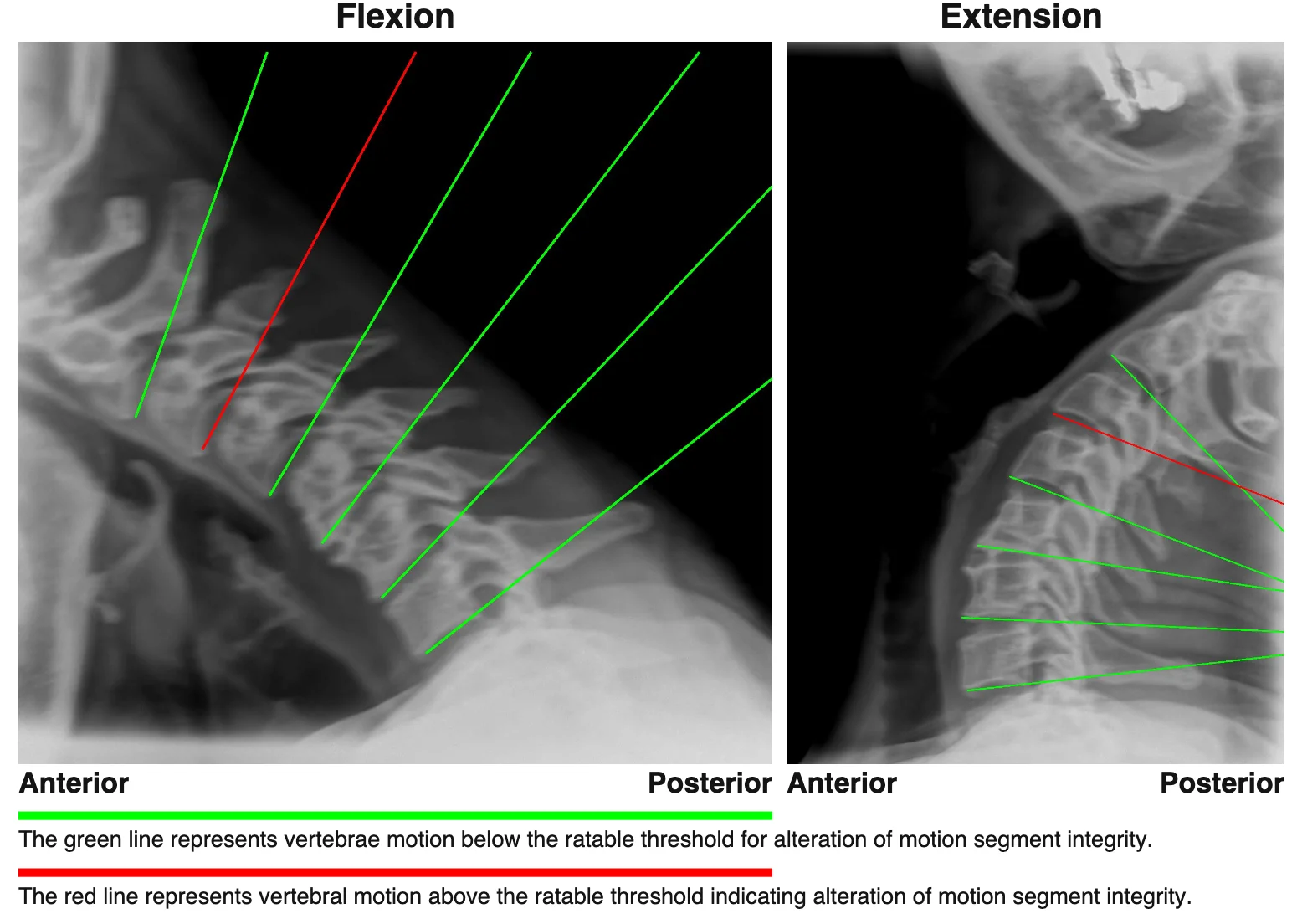
How We See Possible Ligament Damage on X-Ray
Ligaments don’t show up on X-ray, but the way your vertebrae move does. Here’s how motion X-rays can point to possible ligament…

Injured in a Car Accident in Sarasota? How Florida PIP Works and How to Get Started
Hurt in a Sarasota car accident? Here’s how Florida PIP works, the 14-day rule, and how to get started with us today,…
Ready to find out what’s going on?
Your new patient exam includes a full consultation, digital X-rays, and a PostureRay report, so you leave knowing exactly where you stand.
Related: Whiplash & Concussions · Headaches · Lower Back Pain · Disc Issues