
TMJ & Jaw Pain Help in Sarasota
Jaw pain rarely travels alone.
Clicking, clenching, or a sore jaw often shows up with neck tension, headaches, and forward head posture. We look at how those pieces fit together for Sarasota, Bradenton, and Lakewood Ranch patients.
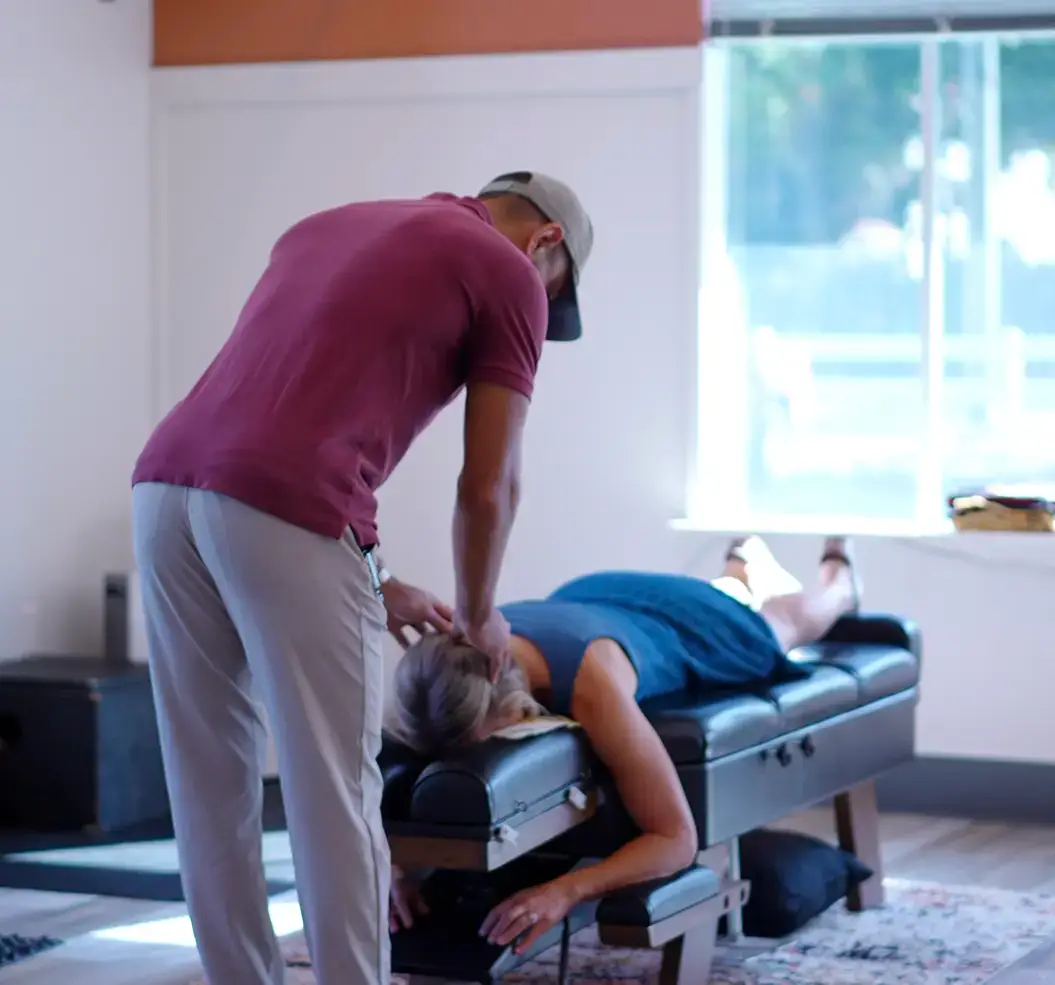
Gentle, low-force TMJ adjusting with an Activator instrument.
What may be behind jaw pain
The temporomandibular joint (TMJ) connects your jaw to your skull, and it works closely with the muscles of your neck and upper back.
Forward head posture, stress and clenching, past injuries like whiplash, and long hours at a screen may all add tension to the jaw and the muscles around it.
does this sound familiar?
- Your jaw clicks or pops when you chew
- You clench or grind your teeth, especially when stressed
- Your jaw is sore when you wake up
- Jaw pain comes with headaches and a tight neck
- Your night guard only helps a little
How we find the cause: position & condition
Every new patient gets the same thorough starting point. We look at two things:
Position
Where your vertebrae and spine sit and how they move. Posture checks, balance scales, and additional testing to see how your body is carrying itself. Range of motion through your whole spine, plus how each segment moves on its own.
Condition
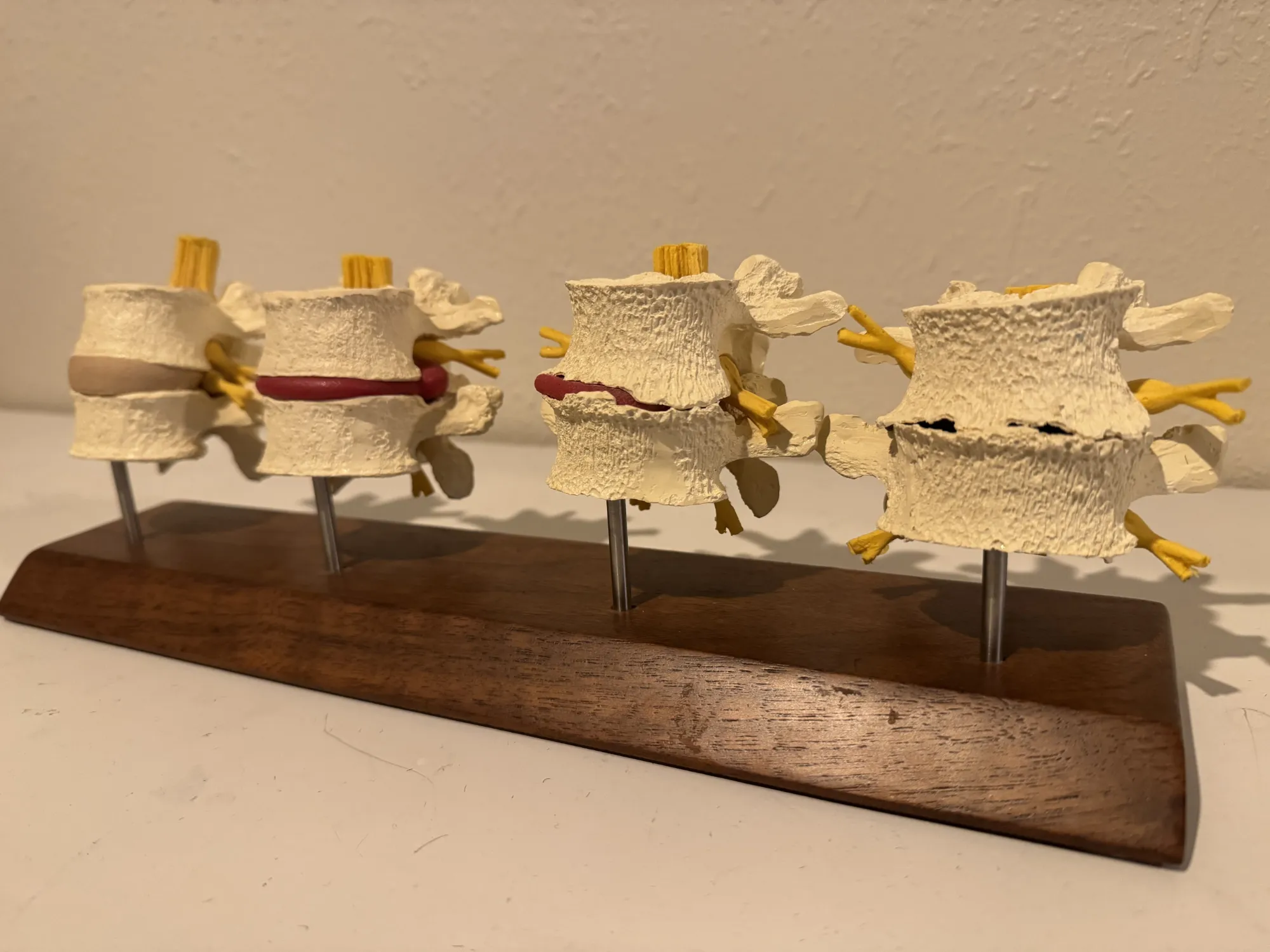
The health of your vertebrae and discs. Full-spine digital X-rays can show disc changes, arthritis, bone spurs, or old injuries that may have created a stress pattern.
For jaw pain, we look closely at the position of your upper neck and how your head sits over your shoulders, since the jaw and upper neck work together. We also check how far your jaw opens and the tension in the muscles around it.
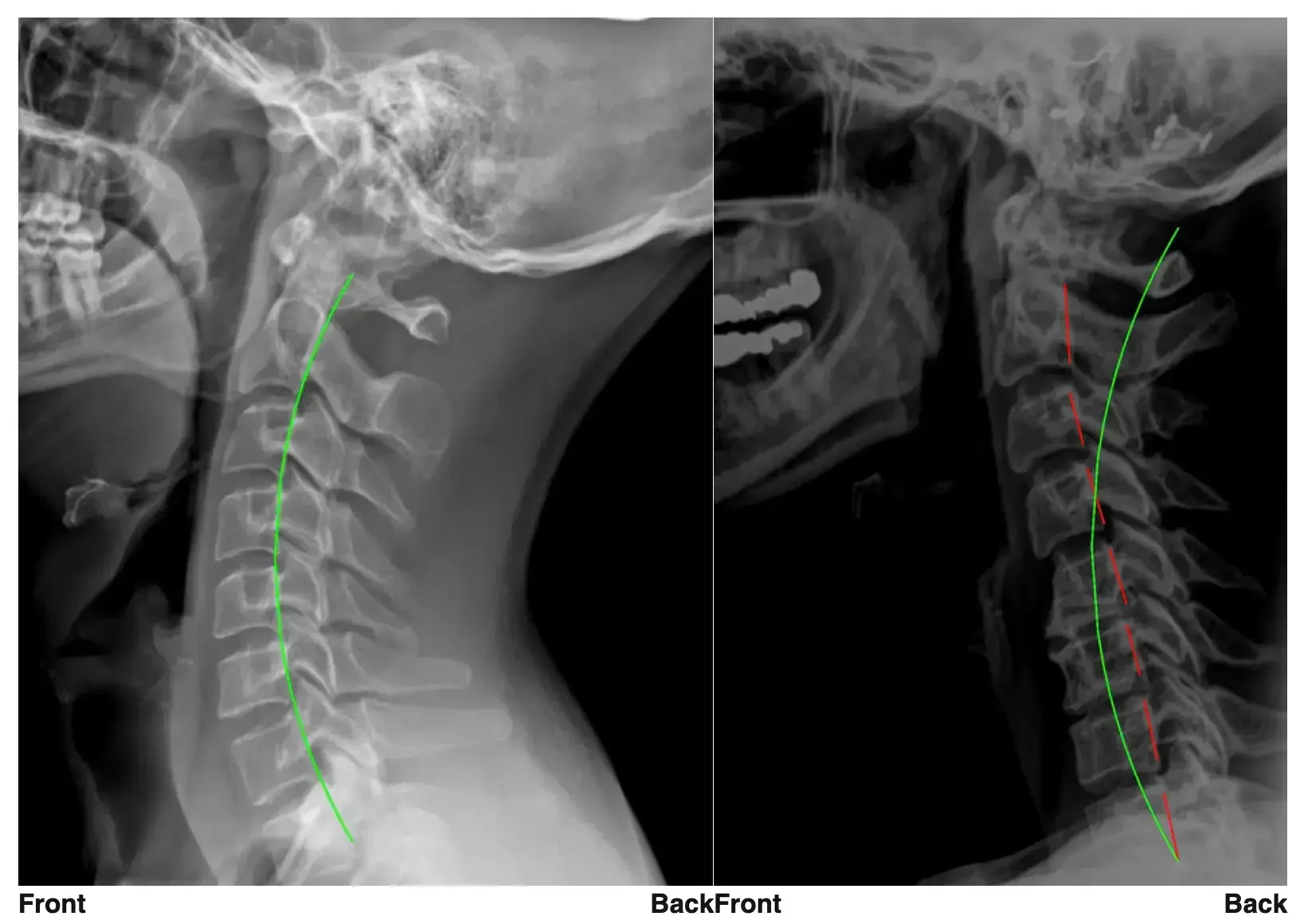
From the side, your spine should have a smooth, healthy curve. We measure yours and chart it against normal:
MildUp to 25% loss of curve
Moderate25-50% loss of curve
SevereMore than 50% loss of curve
Your PostureRay X-Ray Report shows you exactly where you stand, and we re-measure along the way so you can see progress, not just feel it.
How we help jaw pain
Depending on what your exam shows, your plan may include:
Jaw, Neck & Posture Exam
We check how your jaw opens and tracks, plus digital X-rays if needed to see the position and condition of your cervical spine.
Gentle TMJ Adjusting
Low-force TMJ adjusting with an Activator instrument, plus adjustments to the neck and upper back.
Posture & Home Exercises
Jaw and neck exercises, plus habits that may ease clenching.
Teamwork With Your Dentist
We coordinate with your dentist when a night guard or dental care is part of the plan.
When to get medical care first: See a dentist or physician for a jaw that is stuck open or closed, swelling in the face, dental pain or infection, or jaw pain after a hard hit to the face. Jaw pain with chest pain or shortness of breath needs emergency care right away.
What to expect
Feeling better and being fully better aren’t the same thing. Most people notice changes early on. Truly stabilizing a spine that’s been out of position for years can take up to 6-12 months of consistency… That doesn’t mean 6-12 months to feel better, it just means that your body needs time to hold the correction so it doesn’t slide back.
Will it hurt? Changing a spine that hasn’t moved in years can feel like a workout at the beginning. If you feel it, it’s usually in the first couple of weeks, and we adapt our technique to what works best for you.
When to get emergency care: Jaw pain with chest pain, shortness of breath, or sweating can be a sign of a heart problem. Call 911. A jaw that locks open or closed should be seen promptly.
Frequently asked questions
Can a chiropractor help with TMJ?
Many people with jaw pain also have neck and posture issues we can address, and we offer gentle TMJ adjusting with an Activator instrument. Your exam tells us how much of your jaw pain may be connected.
Should I still see my dentist?
Yes. We often work alongside dentists, especially when grinding or bite changes are part of the picture.
Why does my jaw pain come with headaches?
The jaw, neck, and head share muscles and nerves. Tension in one area commonly shows up in the others.
Can stress make jaw pain worse?
It often does. Many people clench their jaw when they’re stressed, focused, or asleep. Noticing daytime clenching and working on neck and shoulder tension can take some load off the jaw.
What can I do at home for jaw pain?
Soft foods during flare-ups, skipping gum, and catching yourself clenching during the day all help. We’ll give you a few simple jaw and neck exercises to start with.
Can my sleep position affect my jaw?
It can. Sleeping on your stomach with your head turned, or with a hand under your jaw, puts pressure on one side. Sleeping on your back or side with good neck support is usually easier on the jaw.
Keep Reading: Neck Pain

How We Measure Arthritic Changes on X-Ray
What arthritic changes look like on a spine X-ray, how we check the shape and density of each vertebra, and what it…

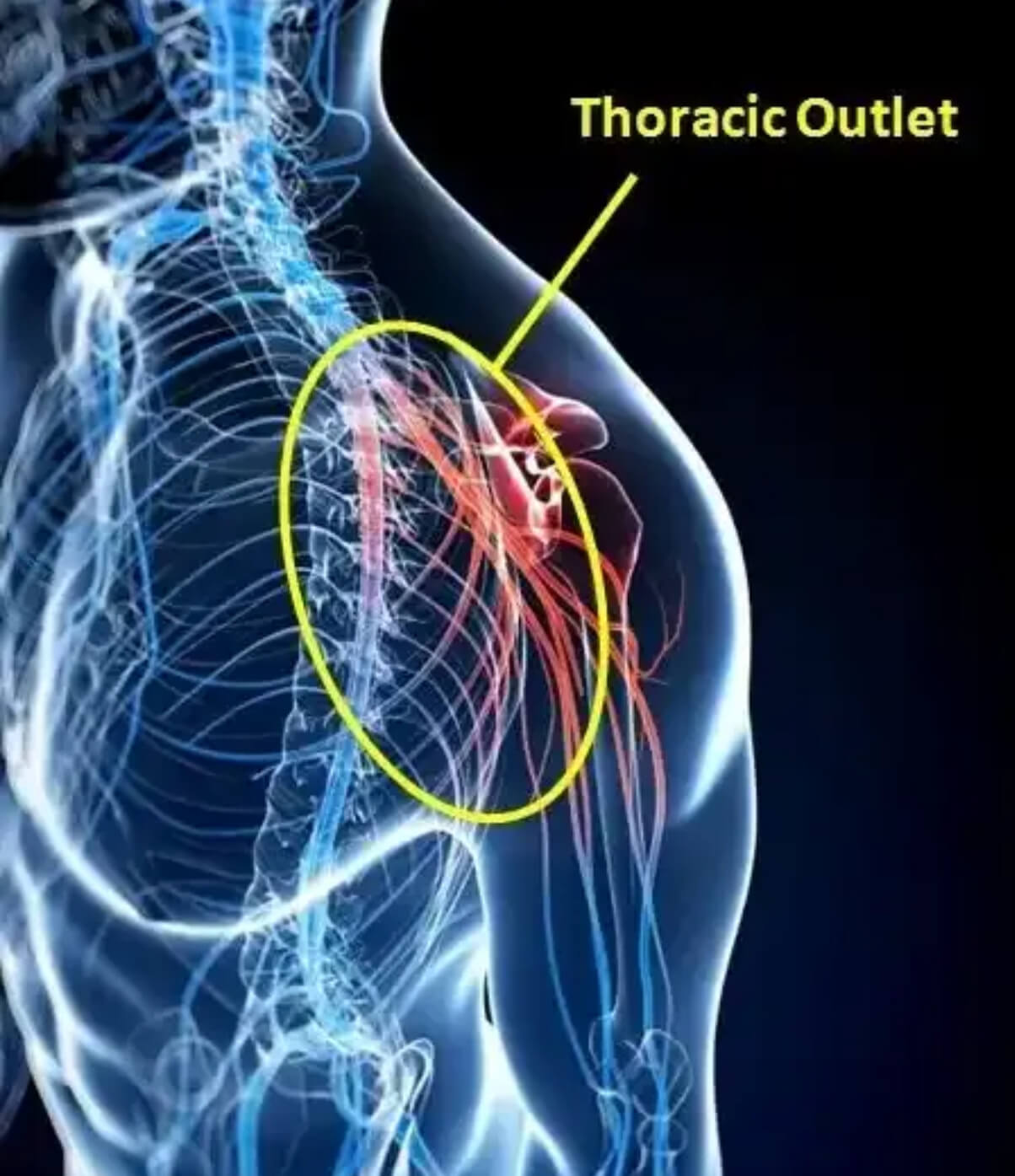
Thoracic Outlet Syndrome: A Sarasota Quarterback’s Story
A Sarasota high school QB still had numb, heavy arms after first rib surgery. Here’s what we found and how he got…

Forward Head Posture: Why Your Neck Is Carrying More Than It Should
Every inch your head drifts forward adds load to your neck and upper back. Here’s what that does over time and how…
Done with the clicking, clenching, and headaches?
Book your $47 new patient exam and find out how your jaw, neck, and posture fit together.