
Shoulder & Elbow Injury Recovery in Sarasota
Your shoulder and elbow are only as good as the neck and mid-back driving them.
For throwers, lifters, golfers, and anyone who can’t reach overhead without paying for it.
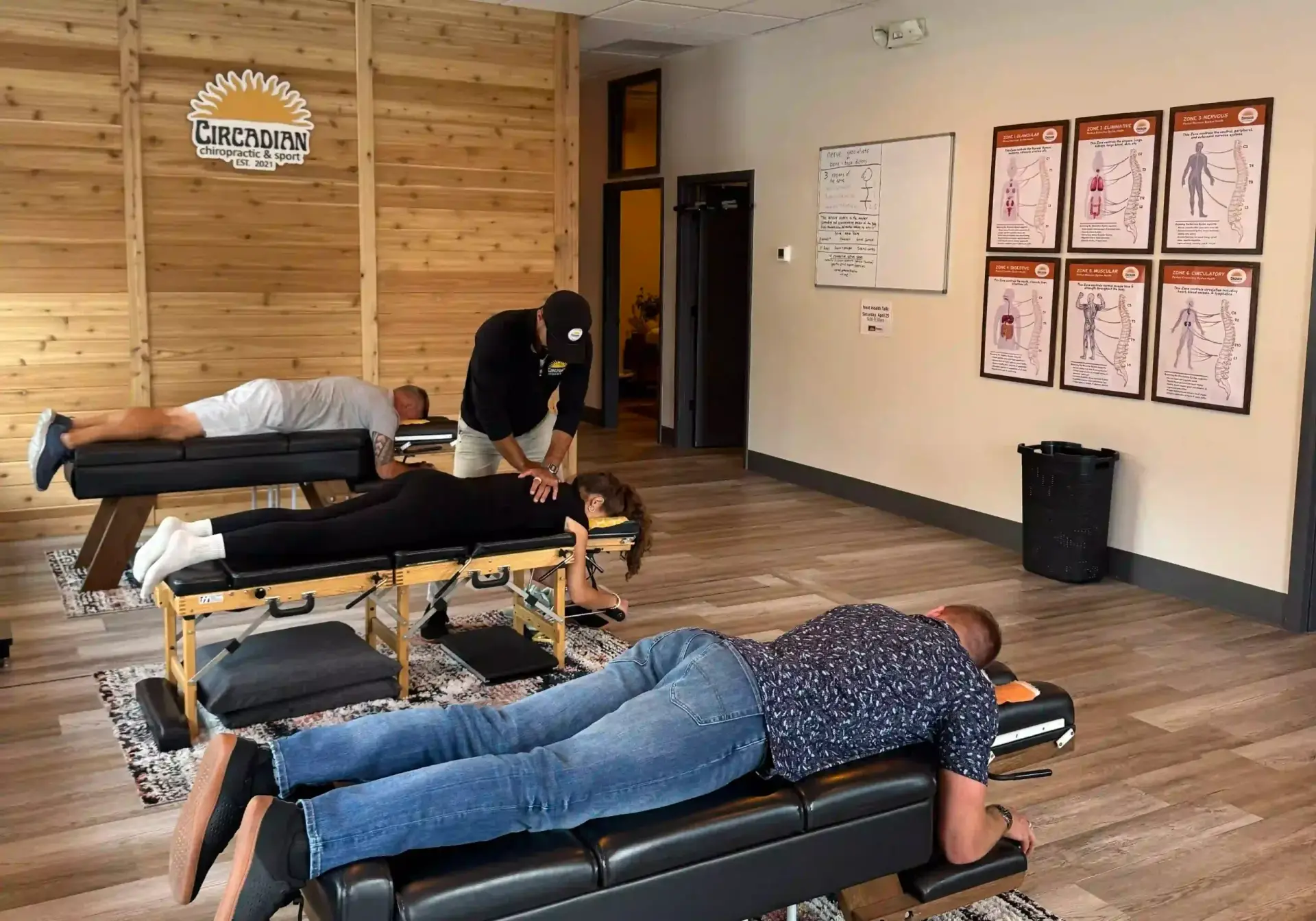
Why shoulders and elbows keep getting hurt
The nerves that run your shoulder muscles come from the lower part of your neck. When those nerves are under stress, the small rotator cuff muscles can fire late or weak, and the joint takes load it wasn’t built for.
Your shoulder blade also rides on your mid-back. When the mid-back rounds forward, the shoulder blade tips with it, and the space in the joint shrinks. That’s a common setup for pinching and impingement.
I spent years around pitchers. The arm is usually the victim, not the cause. We look at the whole chain: neck, mid-back, shoulder blade, and the muscles that control them.
The elbow works the same way. Tennis and golfer’s elbow often trace back to the nerves from your lower neck, or to a shoulder that isn’t doing its share of the work, so the elbow ends up taking the load.
does this Sound familiar?
- Pain reaching overhead or behind your back
- Clicking or pinching in the front of the shoulder
- One arm lifts noticeably better than the other
- Pain sleeping on that side, or a rotator cuff, impingement, or frozen shoulder diagnosis
- Tennis or golfer’s elbow, or elbow pain when you grip, throw, or swing
How we find the cause: Alignment, movement, spinal Damage
Every new patient gets the same thorough starting point. We test your spine three ways:
Alignment
Posture checks, balance scales, and eyes-closed stability testing to see how your body is carrying itself.
movement
Range of motion through your whole spine, plus how each segment moves on its own.
spinal Damage
Full-spine digital X-rays can show disc changes, arthritis, bone spurs, or old injuries that may have created a stress pattern.
For shoulders and elbows, we compare range of motion and grip strength side to side, check the curve of your neck, and look at how your shoulder blades sit on your mid-back.
From the side, your spine should have smooth, healthy curves. We measure yours and chart it against normal:
MildUp to 15% loss of curve
Moderate15–30% loss of curve
SevereMore than 30% loss of curve
Your PostureRay X-Ray Report shows you exactly where you stand, and we re-measure along the way so you can see progress, not just feel it.
How we help shoulder and elbow injuries
Depending on what your exam shows, your plan may include:
NeuFit (nervous system + fitness)
This is often where shoulders turn the corner. The Neubie helps us find which muscles aren’t firing, reset those patterns, and rebuild strength through the full range of motion, including after surgery once your surgeon clears you.
Corrective Chiropractic Care
Adjustments to the neck and mid-back that feed the shoulder, plus the shoulder joint itself when needed, with spinal hygiene exercises to keep it moving well.
Spinal Decompression
If your exam shows a potential disc bulge or herniation in your neck sending pain, numbness, or weakness into the arm, cervical decompression on our Chattanooga Triton 6M traction table is used to gently take pressure off the disc and nerve.
PLACEHOLDER – YOUR STORY: Your baseball perspective on shoulders and throwers, or a patient who returned to throwing, lifting, or golf. – Dr. Alex
What to expect
Feeling better and being fully better aren’t the same thing. Most people notice changes early on. Truly stabilizing a spine that’s been out of alignment for years can take up to 6-12 months of consistency… That doesn’t mean 6-12 months to feel better, it just means that your body needs time to hold the correction so it doesn’t slide back.
Will it hurt? Changing a spine that hasn’t moved in years can feel like a workout at the beginning. If you feel it, it’s usually in the first couple of weeks, and we adapt our technique to what works best for you.
When to get emergency care: If your shoulder looks deformed, you can’t move it after a fall or collision, or you have chest pain spreading into the arm, get emergency care.
What our patients say
I have been visiting them for over a year and a half. Originally came because of a shoulder injury that Alex helped me to heal, and now I have been just a regular as it has helped me in many other ways. Thank you
★★★★★ Google review
Frequently asked questions
Is it my rotator cuff or my neck?
Sometimes both. Your exam checks the shoulder and the nerves that run it, so we’re not guessing.
Can NeuFit help after shoulder surgery?
Once your surgeon clears you for rehab, yes. It’s often used to help muscles re-engage after surgery.
Do I need an MRI?
Not always. If your exam suggests a tear or something structural in the joint, we’ll tell you and help you get imaging.
Can you help a frozen shoulder?
Frozen shoulder takes time no matter what, but many people find their range of motion comes back faster when the neck, mid-back, and surrounding muscles are working well.
Can you help tennis or golfer’s elbow?
Often, yes. Elbow pain frequently traces back to the nerves from your lower neck, or to a shoulder that isn’t pulling its weight. We look at the whole chain, not just the elbow.
Where are you located?
We’re at 5250 17th St, Unit 101, on the corner of 17th & Honore, centrally located between University and Fruitville and about 5 minutes from I-75 and UTC. We see patients from Sarasota, Bradenton, and Lakewood Ranch.
Ready to find out what’s going on?
Your new patient exam includes a full consultation, nerve scans, digital X-rays, and a PostureRay report, so you leave knowing exactly where you stand.
Related: Sports Injuries · Hip, Knee & Foot Injuries · Posture · Performance Chiropractic