
Digital X-Ray & PostureRay Reports in Sarasota
We don’t guess. We measure.
In-office digital X-rays and PostureRay analysis, so your plan is built on what is actually there.
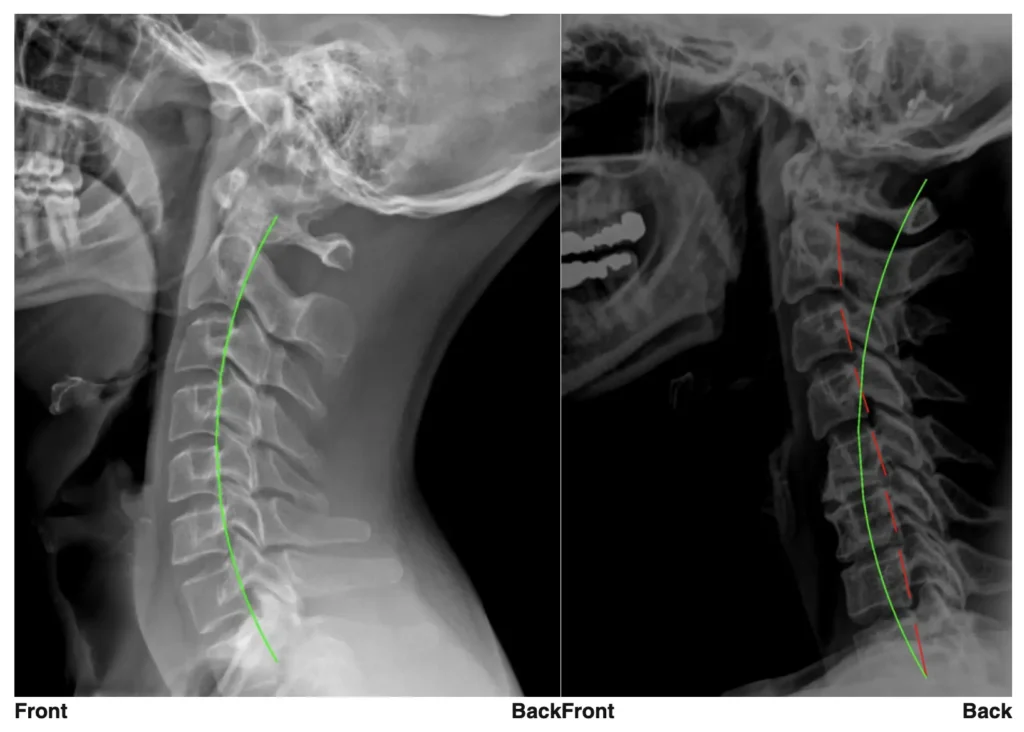
X-Rays with PostureRay help you visualize exactly where your spine has shifted from normal.
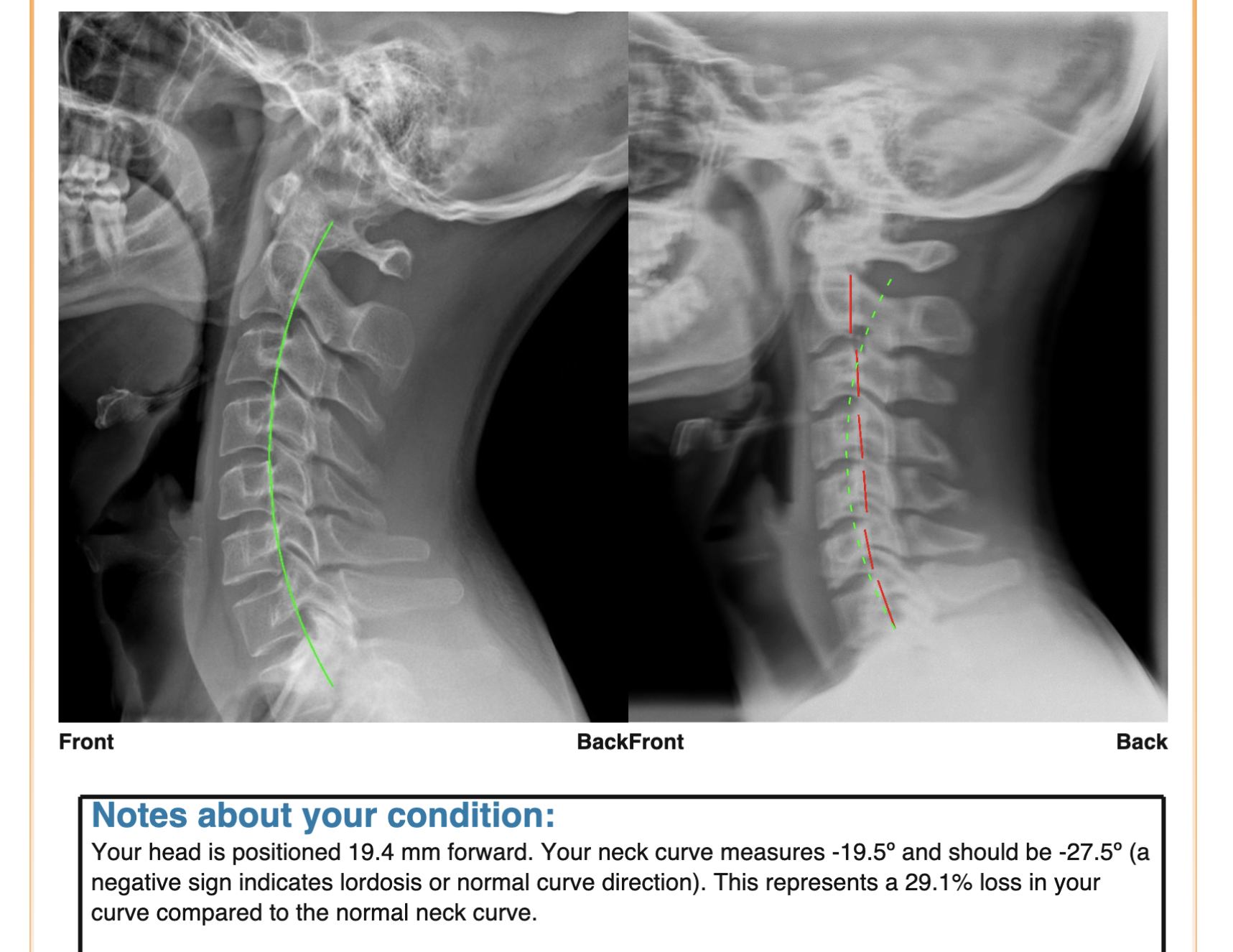
Neck
Is your neck curve where it should be?
We measure the curve of your neck against normal and show you, side by side, how much has been lost.
Then we re-measure along the way so you can see the change, not just feel it.
Low back
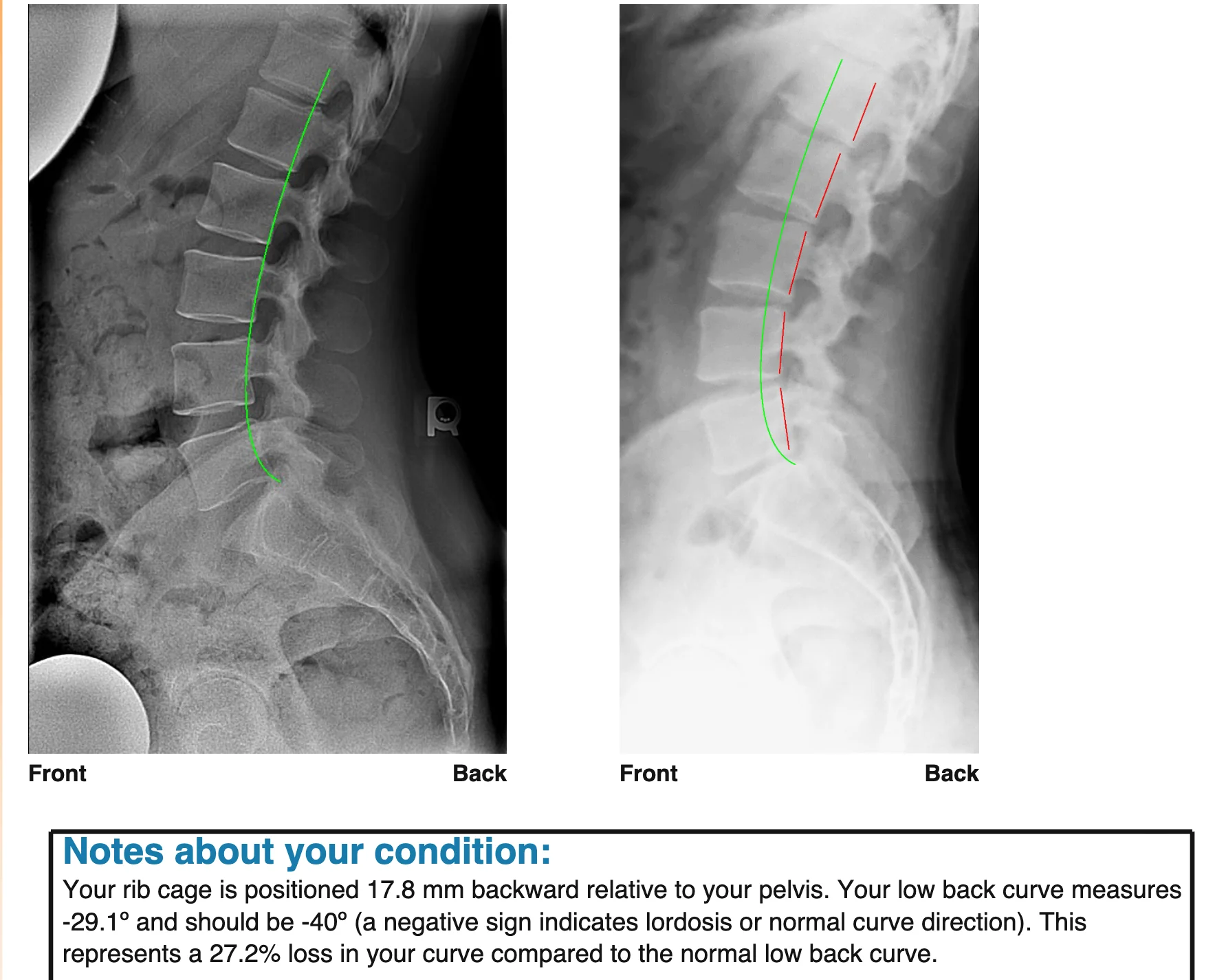
Is your low back curve where it should be?
Your low back should have a healthy inward curve. We measure yours against normal and show you exactly how much it differs.
A flattened curve changes how load moves through your discs and joints, so this helps us tailor your care.
Discs & arthritis
What’s happening with your discs?
Discs don’t show up directly on X-ray, but the space between each pair of vertebrae does. When that space narrows compared to the levels around it, it tells us the disc there is under more stress. We also check each vertebra’s shape and edges for arthritic changes like bone spurs.
Our disc models show the same progression we look for on your X-rays, from a healthy disc to one that has thinned and degenerated.
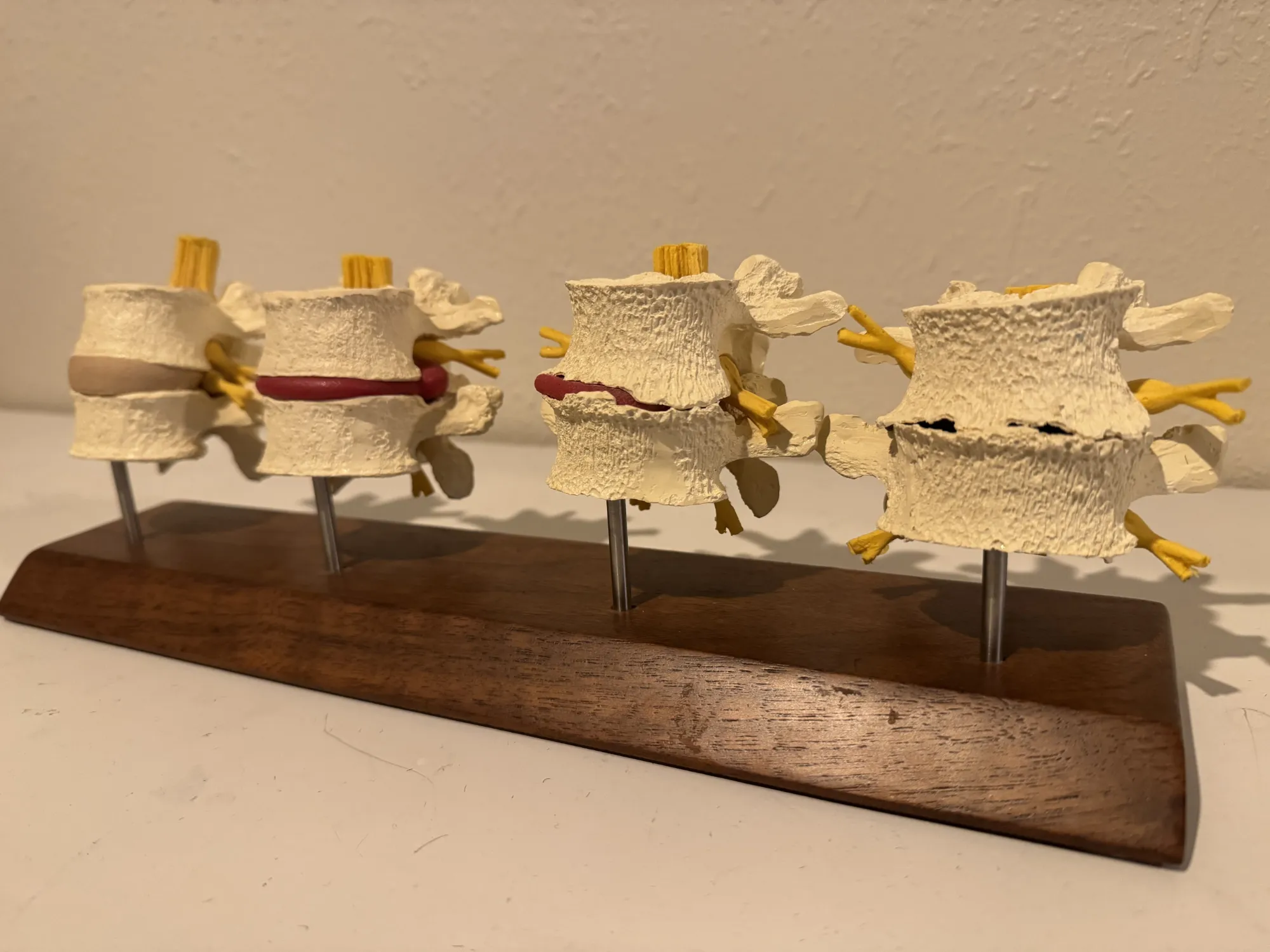
From a healthy disc (left) to advanced degeneration (right).
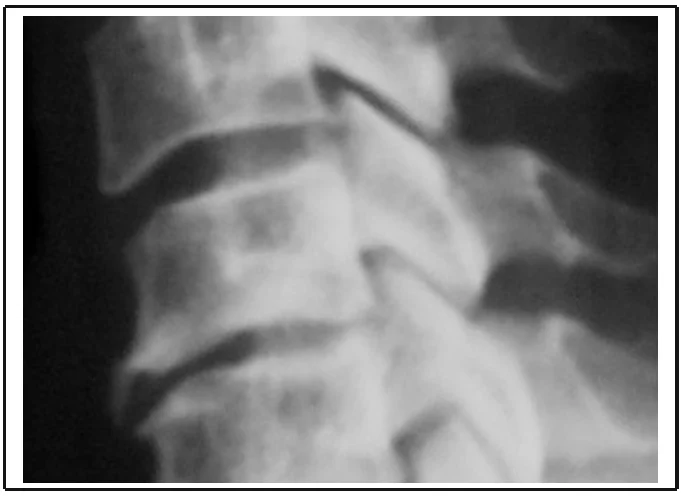
On X-ray: normal disc spacing up top, a narrowed disc space below.
Scoliosis
Does your spine curve side to side?
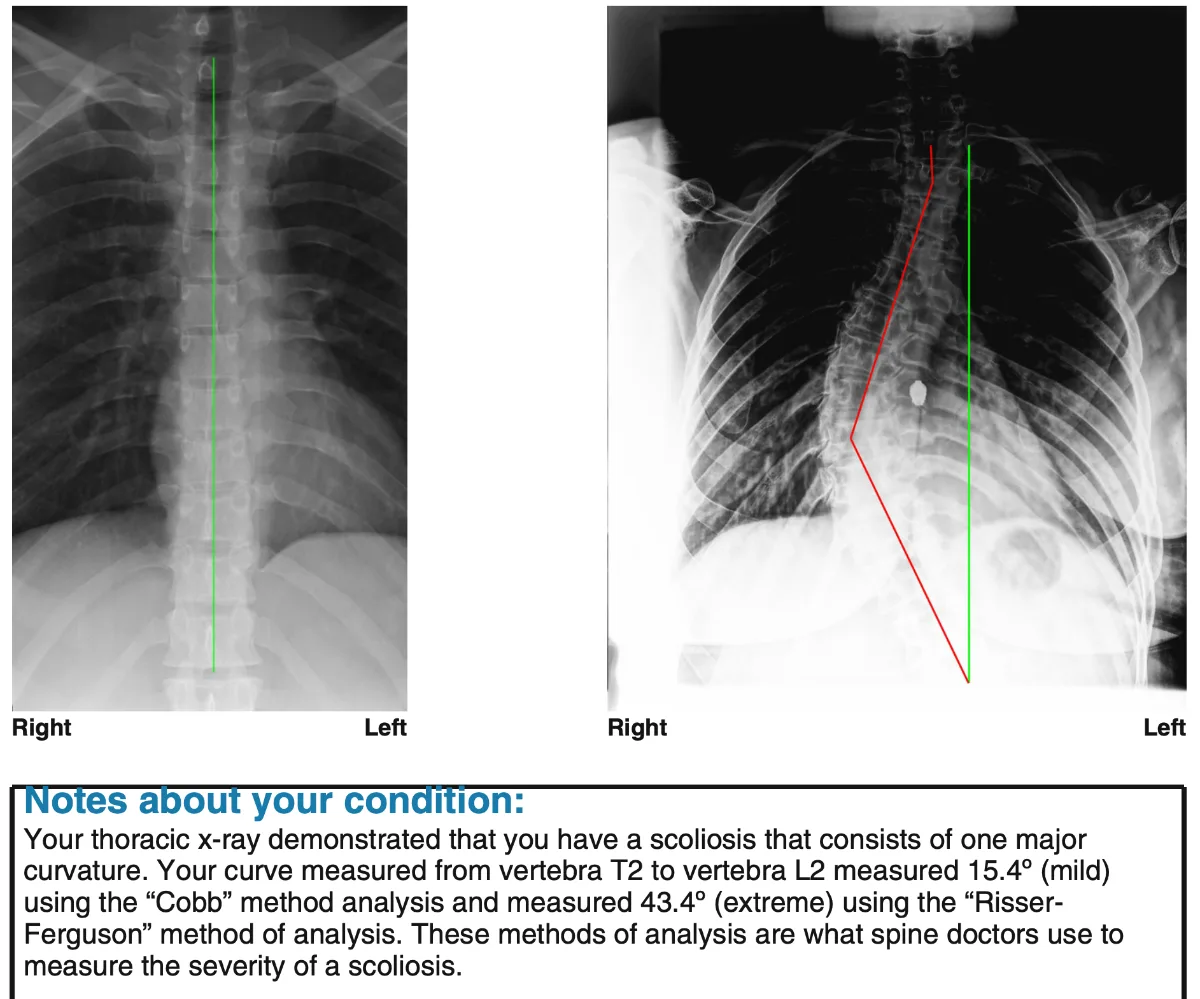
From the front, your spine should be straight up and down. If it curves, we measure the curve two ways, the Cobb and Risser-Ferguson methods spine specialists use.
Then we track it over time with follow-up X-rays, only when your exam shows a reason to.
Whiplash & hypermobility
Whiplash? Hypermobile? We can see it on X-ray.
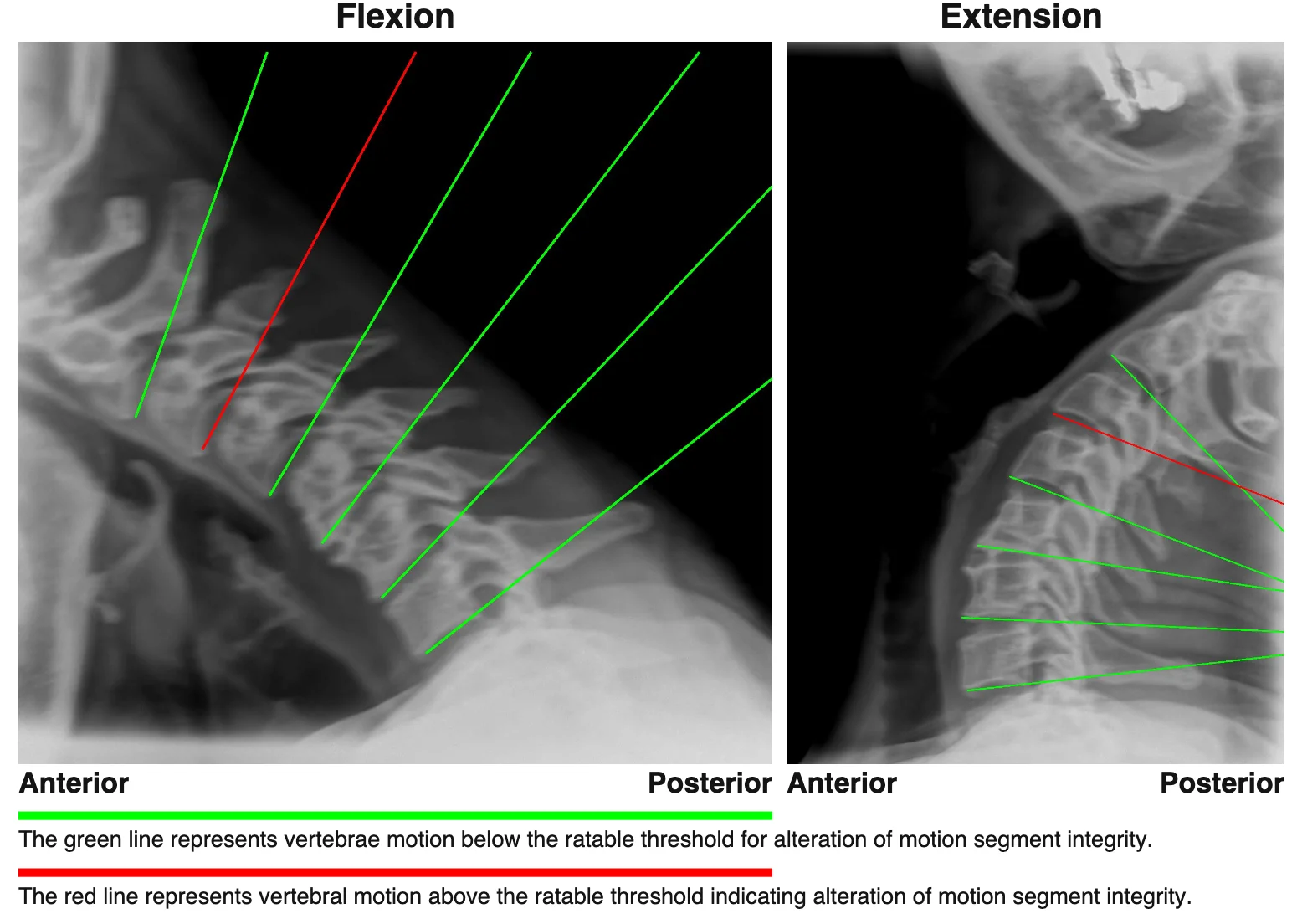
Motion X-rays, taken bending forward and back, let us measure how much each vertebra in your neck shifts.
After a car accident, excess movement can point to possible ligament injury, which we document for your personal injury case.
Why we X-ray
Your X-rays tell us things no hands-on exam can: degenerative discs, bone spurs, arthritis, old injuries that healed in the wrong position, and any reason care should be modified.
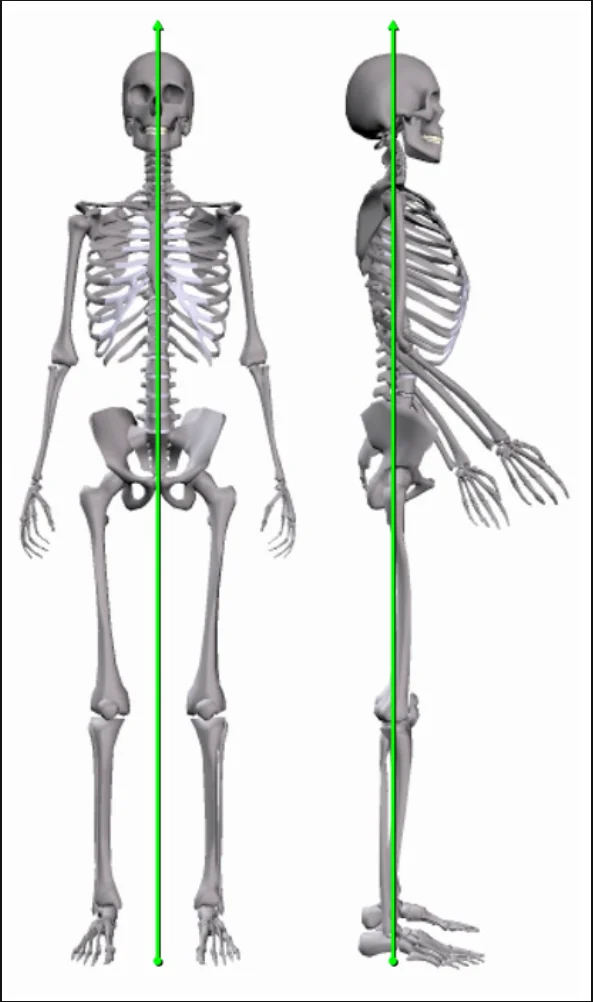
From the front, a healthy spine should be straight up and down. From the side, it should have smooth, healthy curves. We measure yours and chart it against normal: up to 25% loss is mild, 25 to 50% is moderate, and more than 50% is severe.
PostureRay turns those measurements into a clear report you can actually understand. Then we re-measure along the way, so you can see your progress, not just feel it.
When we don’t X-ray: We only take X-rays when your exam gives us a reason to, and we take extra care with kids and women who are or may be pregnant.
How it works
1
Quick images
Digital X-rays are taken right in our office during your first visit, when needed.
2
Measured analysis
PostureRay measures your curves and alignment against normal.
3
Progress re-checks
We re-measure during your care so you can see what has changed.
Who it helps
X-rays and PostureRay reports guide our care for:
- Neck Pain
- Lower Back Pain
- Disc Issues
- Headaches & Migraines
- Posture, Mid-Back & Ribs
- Whiplash & Concussions
- Car Accidents & Personal Injury
- Sciatica, Nerve Pain & Neuropathy
- Sports Injuries
What our patients say
I’ve been to several chiropractors and I’ll say this stands in a league of its own. … In my initial appointment he did several evaluations (including x-ray scans) and took the time to educate me on everything. After just my first adjustment my golf swing feels more fluid and my body feels loose. Excellent experience and will be back bi-weekly!
★★★★★ Google review
patient stories
Real results from Sarasota patients
Hear it from a patient
[Video testimonial coming soon: replace this line with a YouTube embed of a digital X-ray & PostureRay patient, then remove the circ-hidden class.]
[Case story title]
[Case story coming soon: a short digital X-ray & PostureRay patient story with a link to the full blog post. Remove the circ-hidden class when ready.]
What your PostureRay report shows you
After your X-rays, we use PostureRay to measure the position and condition of your spine and turn it into a report you can actually read. You’ll see:
- The curve of your neck and lower back compared to normal, charted as Mild (up to 25% loss of curve), Moderate (25-50%), or Severe (more than 50%)
- How far your head sits forward of your shoulders
- Disc height at each level, plus signs of arthritis, bone spurs, or old injuries
- How your spine sits from the front, including any sideways curve
We walk through it with you at your Visit 2 report, and we re-measure along the way so you can see progress, not just feel it.
In-house X-rays, no separate imaging trip
Because our digital X-ray is right in the office, you don’t need a separate imaging appointment. Most people get X-rays at Visit 1, when needed, and go over the results at Visit 2.
If your exam points to something an X-ray can’t show, like a soft-tissue injury or a pinched nerve that needs a closer look, we’ll tell you and help you get an MRI or the right referral.
Frequently asked questions
Are X-rays safe?
Digital X-rays use a low dose of radiation, and we only take them when your exam gives us a reason to.
Can I bring my previous X-rays or MRI?
Yes, please do. Recent imaging can help, and sometimes it means we need fewer new images.
Why a full spine X-ray?
Your spine works as one unit. A problem in your lower back can change how your neck carries your head, so we look at the whole structure.
What is PostureRay?
PostureRay is software that measures your spinal curves and alignment from your X-rays and posture images, and compares them to normal in a report you can follow.
Can kids get X-rays?
Only when there’s a clear reason, like a fall, a suspected scoliosis curve, or symptoms that don’t add up. We take only the views we need to get a clear picture.
Can you send my X-rays to my other doctors?
With your permission, yes. We can share your images and report with your medical doctor, orthopedist, or, after a car accident, your attorney.
Do you take X-rays after a car accident?
Yes, when your exam suggests it. X-rays help us see and document injuries after a crash, which matters for your care and for your PIP claim.
How fast do I see my X-rays?
Digital images come up on screen right away, with no waiting on film. We review them in detail and go over your full report with you at Visit 2.
Keep Reading: More on Digital X-Ray & PostureRay

How We Measure Arthritic Changes on X-Ray
What arthritic changes look like on a spine X-ray, how we check the shape and density of each vertebra, and what it…

What a Normal Spine Looks Like on X-Ray
From the front your spine should be straight. From the side it should have four healthy curves. Here’s what “normal” means on…

How We Measure Disc Height on X-Ray
Discs don’t show up directly on X-ray, but the space between your vertebrae does. Here’s how we measure disc height and what…

How We See Possible Ligament Damage on X-Ray
Ligaments don’t show up on X-ray, but the way your vertebrae move does. Here’s how motion X-rays can point to possible ligament…

Disc Height after Non-Surgical Spinal Decompression in Sarasota
Can spinal decompression restore disc height? A Sarasota chiropractor walks through what the research shows, who is a good fit, and how…

Are X-Rays Safe? What Sarasota Patients Should Know
How much radiation is in a spine X-ray, how it compares to everyday background radiation, and when we do and don’t take…
Ready to find out what’s going on?
Your new patient exam includes a full consultation, digital X-rays when needed, and a PostureRay report, so you leave knowing exactly where you stand.
Related services: Family Chiropractic Care · Non-Surgical Spinal Decompression · NeuFit