
Vertigo & Dizziness Help in Sarasota
When the room spins or you feel off-balance, everything gets harder.
Driving, working out, even rolling over in bed. For Sarasota, Bradenton, and Lakewood Ranch patients whose dizziness may be tied to the neck, especially after a car accident, a fall, or a sports hit.
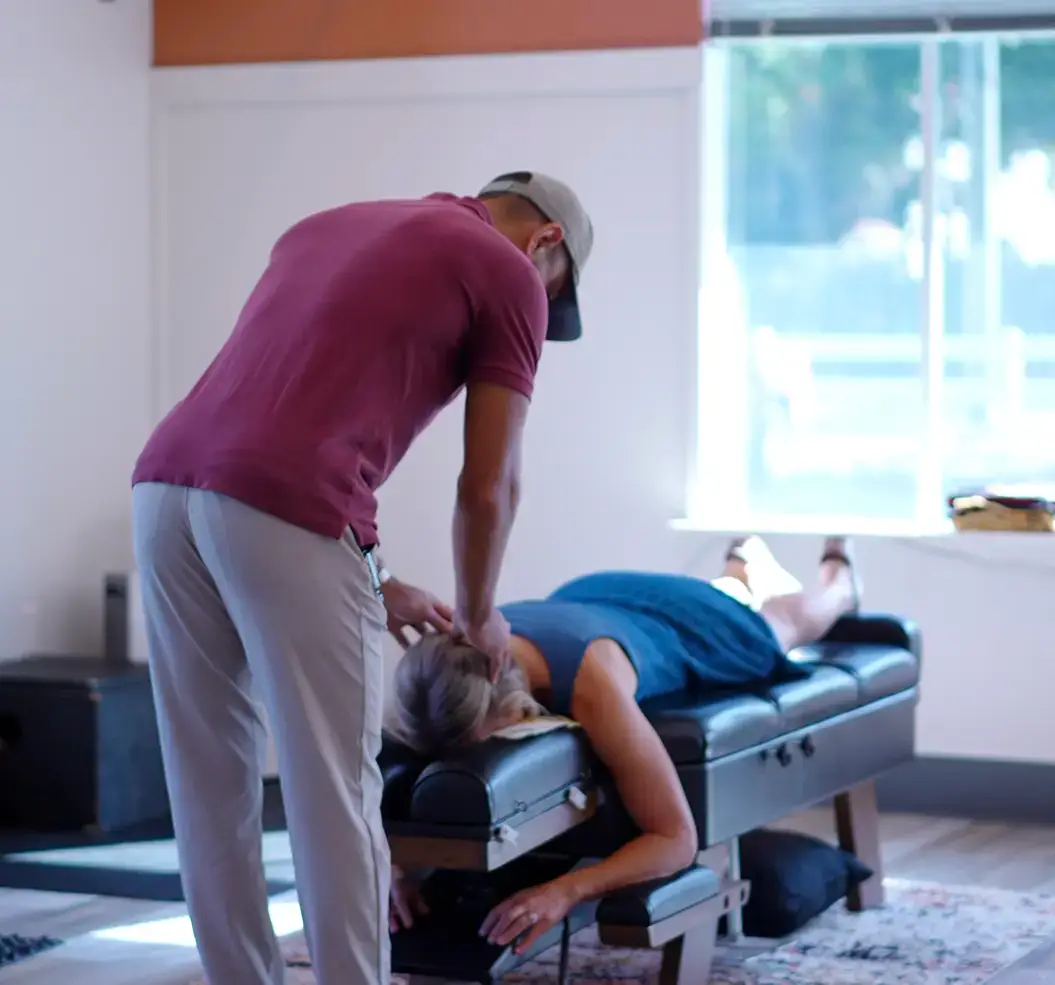
We check the upper neck and nervous system to see whether your neck may be part of your dizziness.
What may be behind your dizziness
Some dizziness starts in the inner ear. Some is tied to the upper neck. Your upper neck is packed with sensors that tell your brain where your head is in space.
When the position and condition of the upper cervical spine change after an injury, those signals may not match what your eyes and inner ear report. Many people describe that mismatch as dizziness or unsteadiness. It is often called cervicogenic dizziness, and it commonly shows up alongside neck pain, stiffness, and headaches.
does this sound familiar?
- You feel dizzy when you turn your head or look up
- You have felt off-balance since a car accident
- Your neck is stiff and you get lightheaded
- Dizziness comes with headaches at the base of your skull
- You feel foggy and unsteady after a concussion
How we find the cause: position & condition
Every new patient gets the same thorough starting point. We look at two things:
Position
Where your vertebrae and spine sit and how they move. Posture checks, balance scales, and additional testing to see how your body is carrying itself. Range of motion through your whole spine, plus how each segment moves on its own.
Condition
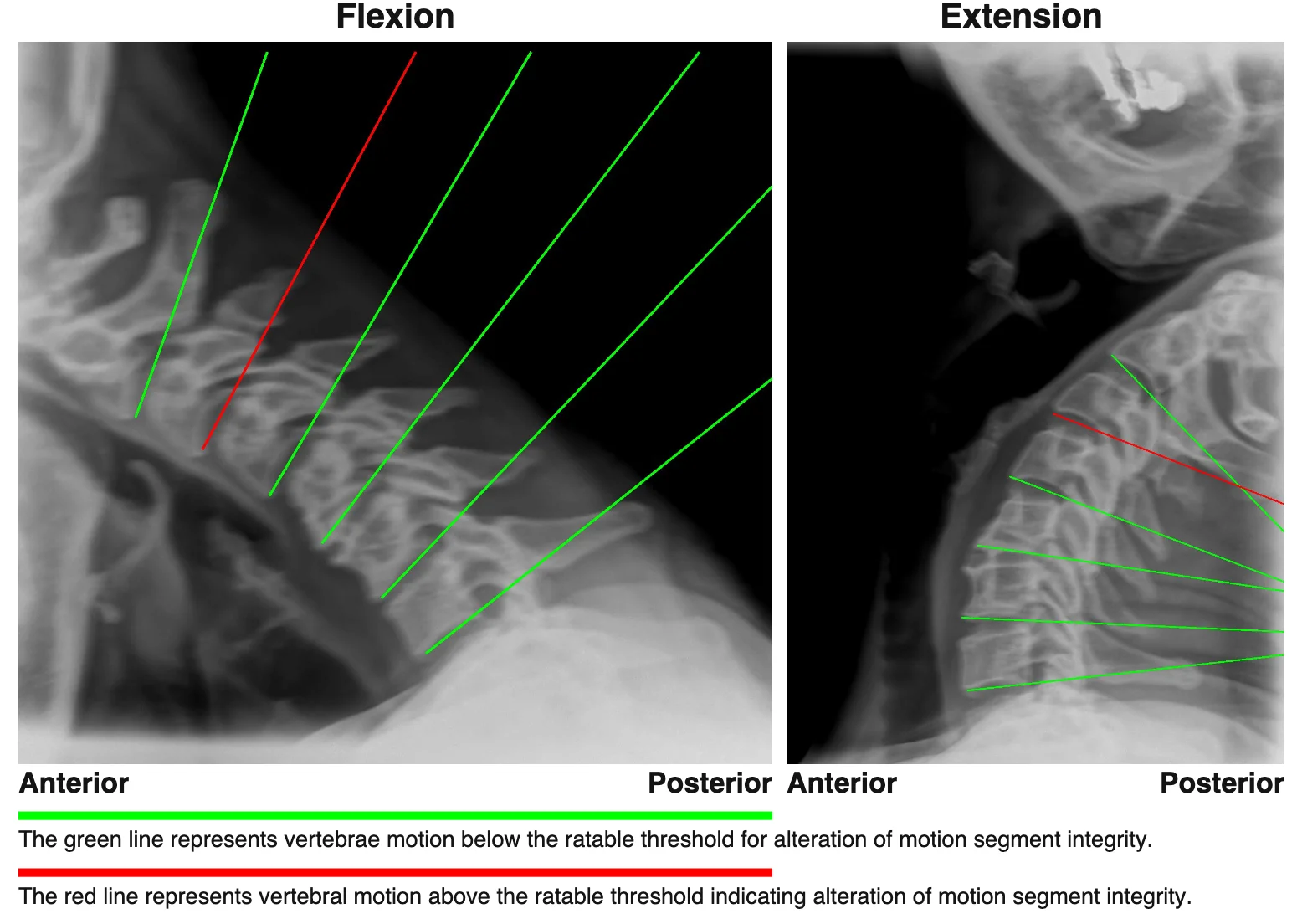
The health of your vertebrae and discs. Full-spine digital X-rays can show disc changes, arthritis, bone spurs, or old injuries that may have created a stress pattern.
For dizziness and vertigo, we look closely at the curve and position of your upper neck, how your head sits over your shoulders, and your balance on our bilateral weight scales. Some causes of dizziness belong with your medical doctor, and we’ll tell you if that’s where you should start.
From the side, your spine should have a smooth, healthy curve. We measure yours and chart it against normal:
MildUp to 25% loss of curve
Moderate25-50% loss of curve
SevereMore than 50% loss of curve
Your PostureRay X-Ray Report shows you exactly where you stand, and we re-measure along the way so you can see progress, not just feel it.
How we help dizziness
Depending on what your exam shows, your plan may include:
Spine & Nerve Exam
A full exam focused on the upper neck, balance, and head and eye coordination, plus digital X-rays if needed to see the position and condition of your cervical spine.
Gentle, Specific Adjustments
Adjustments to the neck and upper back, including low-force instrument options, chosen to fit your exam findings.
Home Exercises
Simple exercises for neck control and balance so your progress holds between visits.
The Right Referral
Suspected BPPV (inner-ear vertigo) or another medical cause? We refer you to a provider who does repositioning maneuvers or the right workup.
When to get emergency care: Call 911 or go to the ER if dizziness comes with sudden weakness or numbness on one side, slurred speech, facial droop, double vision, the worst headache of your life, chest pain, or fainting. Sudden hearing loss also needs prompt medical care.
What to expect
Feeling better and being fully better aren’t the same thing. Most people notice changes early on. Truly stabilizing a spine that’s been out of position for years can take up to 6-12 months of consistency… That doesn’t mean 6-12 months to feel better, it just means that your body needs time to hold the correction so it doesn’t slide back.
Will it hurt? Changing a spine that hasn’t moved in years can feel like a workout at the beginning. If you feel it, it’s usually in the first couple of weeks, and we adapt our technique to what works best for you.
When to get emergency care: Call 911 for sudden dizziness with a severe headache, chest pain, fainting, double vision, slurred speech, facial drooping, or weakness or numbness on one side of the body.
Frequently asked questions
Can a chiropractor help with vertigo?
It depends on the cause. Dizziness linked to the neck often responds well to chiropractic care. Inner-ear or other medical causes may need a different provider, and we will refer you if so.
Is it safe to have my neck adjusted if I am dizzy?
We screen for red flags first and choose the gentlest approach that fits your exam, including low-force options.
How many visits will I need?
That comes from your exam findings. We go over a clear plan at your Visit 2 report of findings.
Can a neck problem cause dizziness?
Some dizziness is linked to the neck, often called cervicogenic dizziness, where stiffness or injury in the upper neck may affect balance signals. Inner-ear and medical causes are common too, so your exam helps sort out which one fits.
Should I see a doctor before coming in?
If your dizziness is new, severe, or comes with hearing loss, fainting, or a bad headache, check with your medical doctor first. If it’s been checked and you’re still off-balance, we’re a good next step.
Keep Reading: Whiplash & Concussions

How We See Possible Ligament Damage on X-Ray
Ligaments don’t show up on X-ray, but the way your vertebrae move does. Here’s how motion X-rays can point to possible ligament…
Are You Hypermobile? Our X-Rays Can Tell
Some necks move too much, not too little. Here’s how motion X-rays measure whether each vertebra in your neck moves more than…

Injured in a Car Accident in Sarasota? How Florida PIP Works and How to Get Started
Hurt in a Sarasota car accident? Here’s how Florida PIP works, the 14-day rule, and how to get started with us today,…
Still feeling off-balance?
Book your $47 new patient exam and find out whether your neck may be part of the picture.