
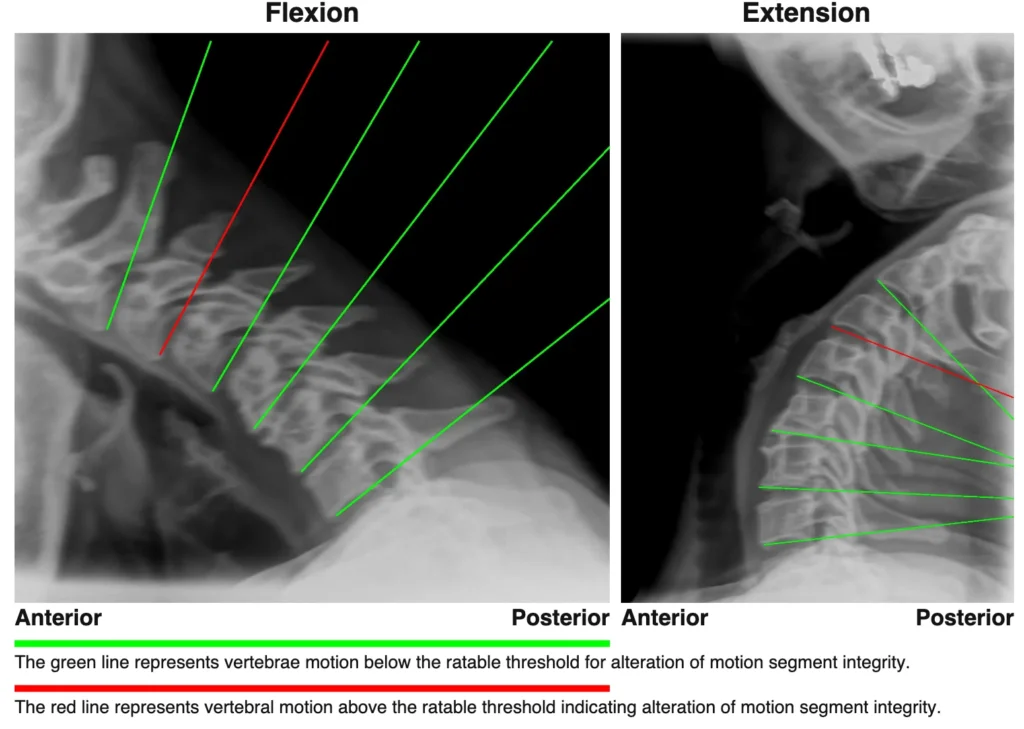
Most people assume neck problems come from being too stiff. But for some people, the problem is the opposite: one or more vertebrae move too much. That’s called hypermobility, and it can be just as uncomfortable. So, are you hypermobile? Here’s how our X-rays can tell.
What hypermobility can feel like
- A neck that feels “loose,” unstable or tired by the end of the day
- Needing to crack or pop your neck often for relief
- Headaches or neck pain that keep coming back
- Symptoms that started or got worse after a car accident, fall or sports collision
These can have other causes too, which is why we measure instead of guessing.
How we measure it
We take side-view X-rays of your neck bent forward and tilted back. PostureRay compares how much each vertebra moves to established normal values, level by level, and flags anything outside that range.
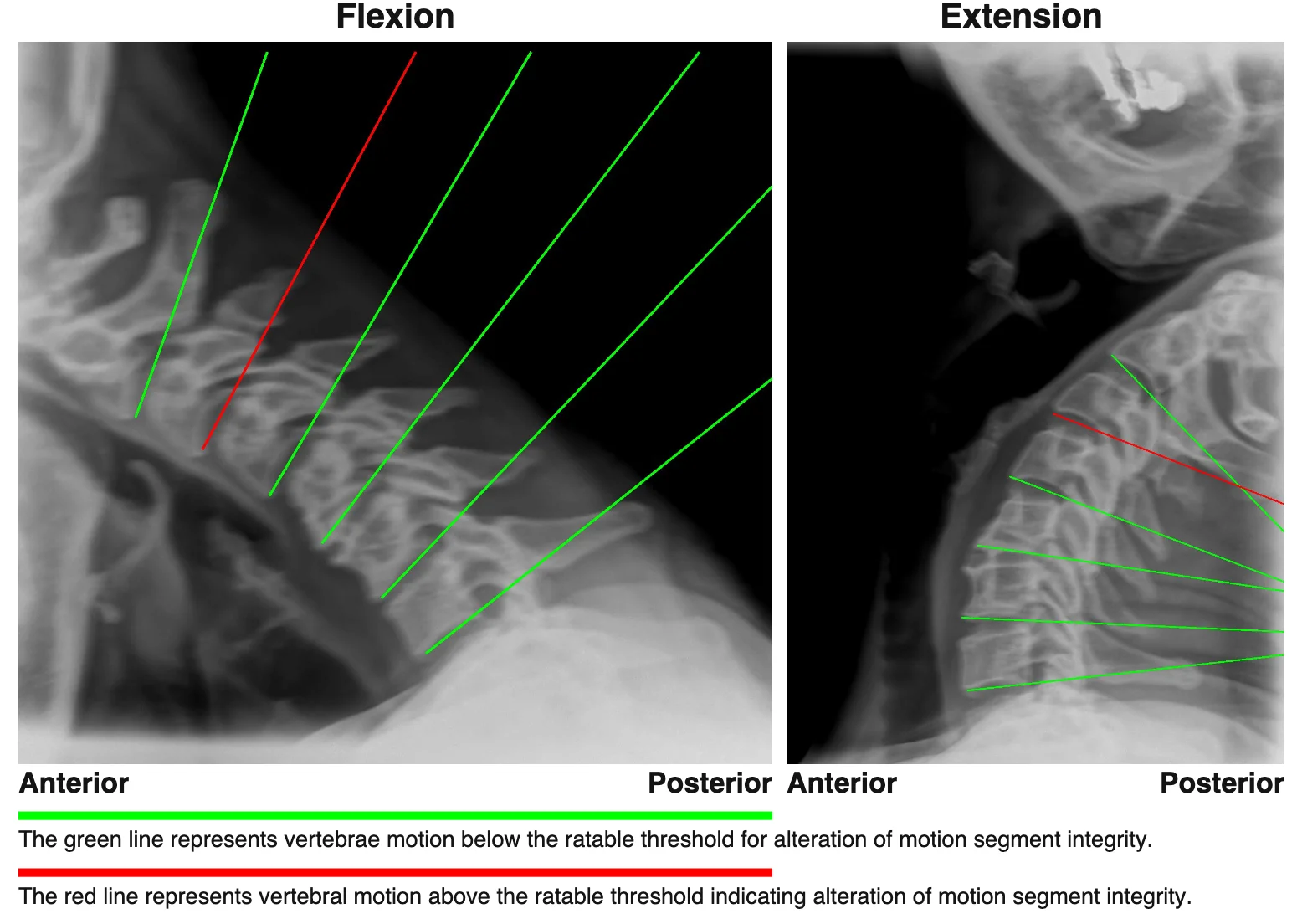
If one level moves much more than the levels around it, that segment is working harder than it should, and the ligaments holding it may not be doing their job. After an injury, that can be consistent with ligament damage. Read more in how we see possible ligament damage on X-ray.
What we do with that information
Hypermobility changes the plan. A segment that already moves too much shouldn’t be pushed further. Instead we focus on the levels that are stuck, plus strength and stability work so the muscles around your neck can support it. Our sports injury and neck pain pages have more on how that looks.
Want to know exactly where your spine stands? Your first visit includes a full exam, and X-rays when your exam shows a reason for them. Schedule your first visit or call (941) 259-2229.

About Dr. Alex Lee
Dr. Alex is a Life Chiropractic College West graduate and former D1 baseball player who owns Circadian Chiropractic & Sport in Sarasota, Florida. He helps families and athletes in Sarasota, Bradenton, and Lakewood Ranch.
new patient special
$47 new patient exam
Consultation, full exam, X-rays (if necessary), your first adjustment, a report of findings, and care recommendations.
$47 new patient exam is for cash-pay new patients. Not valid for visits billed to insurance or a government health program, or for auto-injury/personal injury visits. The patient and any other person responsible for payment has a right to refuse to pay, cancel payment, or be reimbursed for payment for any other service, examination, or treatment that is performed as a result of and within 72 hours of responding to the advertisement for the free, discounted fee, or reduced fee service, examination, or treatment.