
Headache & Migraine Relief in Sarasota
Different headaches. Often the same set of nerves.
If you are reaching for pain relievers every week, it is time to look at your neck.
Why your neck matters for headaches
The nerves that leave the top of your neck go up and around your head. When the top of the neck is misaligned or “stuck”, those nerves are under stress, and headaches are one of the most common ways that shows up.
How you feel it depends on who you are. Some people get tension that climbs up the back of the head. Some feel pressure behind the eyes or pounding in the temples. Some can tell a storm is coming before the forecast does. Others get full migraines with nausea and light sensitivity. How you feel it is different, but it’s often the same set of nerves.
Posture plays a big role. Your head weighs about as much as a bowling ball, and every inch it drifts forward, your neck muscles have to work harder to hold it up. Hours at a desk, on a phone, or behind the wheel can slowly flatten the curve in your neck, and this is becoming more and more common in younger people, likely due to lengthy screen use with less physical activity.
does this Sound familiar?
- Headaches that start at the base of the skull or in the neck
- Pressure behind the eyes or pounding in the temples
- Headaches that come with neck stiffness or tight shoulders
- Taking pain relievers several times a week
How we find the cause: Alignment, movement, spinal Damage
Every new patient gets the same thorough starting point. We test your spine three ways:
Alignment
Posture checks, balance scales, and eyes-closed stability testing to see how your body is carrying itself.
movement
Range of motion through your whole spine, plus how each segment moves on its own.
spinal Damage
Full-spine digital X-rays can show disc changes, arthritis, bone spurs, or old injuries that may have created a stress pattern.
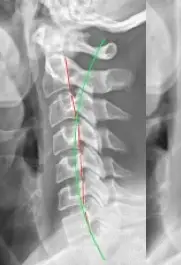
For headaches, we look closely at the curve of your neck. A healthy neck has a gentle forward curve. A flattened or reversed curve is one of the most common findings we see in people with chronic headaches.
From the side, your spine should have smooth, healthy curves. We measure yours and chart it against normal:
MildUp to 15% loss of curve
Moderate15–30% loss of curve
SevereMore than 30% loss of curve
Your PostureRay X-Ray Report shows you exactly where you stand, and we re-measure along the way so you can see progress, not just feel it.
How we help headaches and migraines
Depending on what your exam shows, your plan may include:
Corrective Chiropractic Care
Specific adjustments to the upper neck, combined with at-home spinal hygiene exercises and a cervical orthotic to help restore the curve in your neck.
Spinal Decompression
If your exam shows a potential disc bulge in your neck, or if we visualize degeneration on X-ray, cervical decompression on our Chattanooga Triton 6M traction table is used to gently create space and take pressure off the discs and nerves.
NeuFit (nervous system + fitness)
Chronic headaches often come with neck and upper shoulder muscles stuck in guard mode. The Neubie helps us find and reset those patterns.
CHIROPRACTIC STUDENT’S HEADACHE STORY: My first patient while I was still in Chiropractic school had a concussion from playing rugby, and had such severe headaches that he thought that he would have to drop out of school due to not being able to sleep or focus. After a few adjustments, he was back in the gym exercising, studying for tests without issue, and sleeping through the night. He’s even a chiropractor now! – Dr. Alex
What to expect
Feeling better and being fully better aren’t the same thing. Most people notice changes early on. Truly stabilizing a spine that’s been out of alignment for years can take up to 6-12 months of consistency… That doesn’t mean 6-12 months to feel better, it just means that your body needs time to hold the correction so it doesn’t slide back.
Will it hurt? Changing a spine that hasn’t moved in years can feel like a workout at the beginning. If you feel it, it’s usually in the first couple of weeks, and we adapt our technique to what works best for you.
When to get emergency care: Get emergency care right away for a sudden, severe headache that feels like the worst of your life, a headache after a blow to the head, or one that comes with confusion, vision changes, weakness, or trouble speaking.
What our patients say
Headaches lasting multiple days, weakness, instability, shooting pain, tingling in my leg and my fingers, pain when I sit for a long periods of time, pain when I stand it long period of time, and pain when I lay down for long periods of time, imbalance, difficulty / pain turning my head when I drive to see mirrors, loss of range of motion, and much more that I don’t remember at this point. I moved and needed to find a good chiropractor. Dr. Alex came recommended and after doing some research I decided to give them a try. Ive been really happy with my results. It’s been a great experience working with them. Thanks team!
★★★★★ Google review
Frequently asked questions
Can a chiropractor help with migraines?
Many migraine sufferers find their neck is part of the picture. We can’t promise every headache will stop, but if your exam shows a problem in your neck, correcting it is a smart place to start.
How is this different from just taking something for the pain?
Pain relievers dull the signal. We look for what is behind it: the alignment and curve of your neck and the nerves running through it.
Will I need X-rays of my neck?
In most cases, yes. We need to see the curve of your neck to know what we are working with and whether decompression makes sense.
How quickly will my headaches improve?
Everyone is different. Some people notice changes in the first few weeks, and long-standing problems take longer. We re-measure along the way so you can see progress, not just feel it.
Where are you located?
We’re at 5250 17th St, Unit 101, on the corner of 17th & Honore, centrally located between University and Fruitville and about 5 minutes from I-75 and UTC. We see patients from Sarasota, Bradenton, and Lakewood Ranch.
Ready to find out what’s going on?
Your new patient exam includes a full consultation, nerve scans, digital X-rays, and a PostureRay report, so you leave knowing exactly where you stand.
Related: Posture · Whiplash & Concussions · Nervous System Health · Disc Issues