
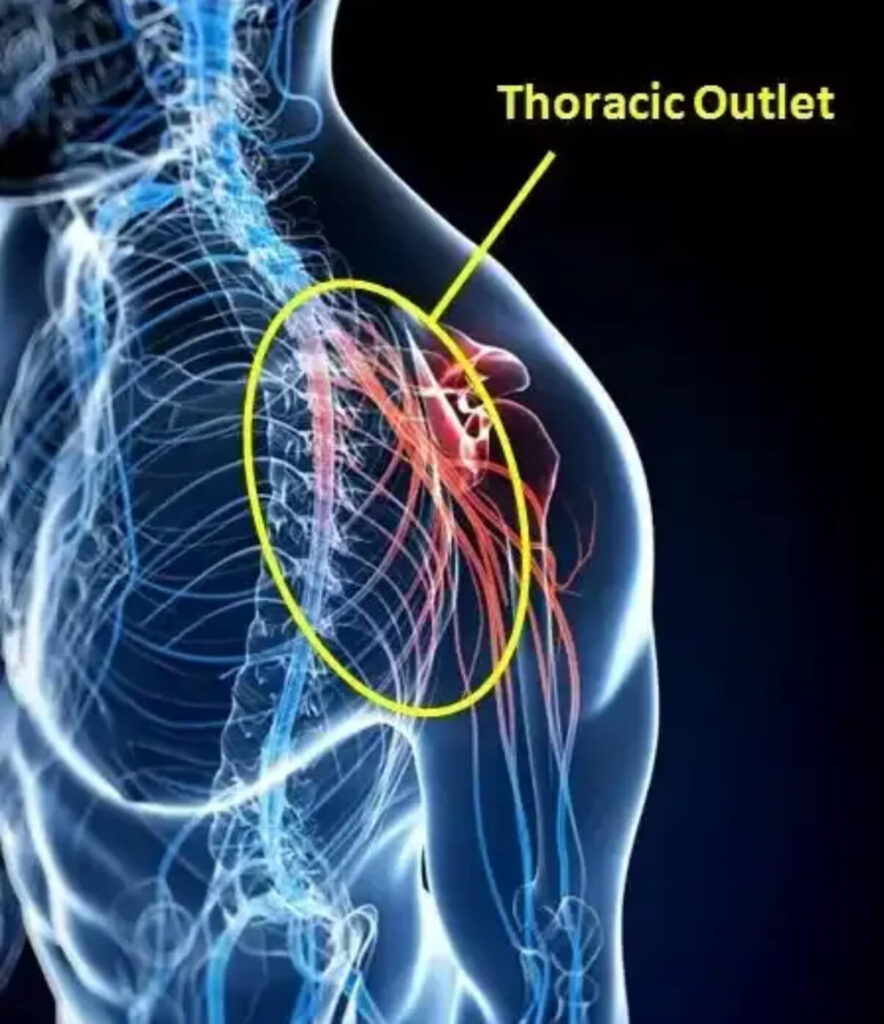
David is a high school quarterback from Sarasota. David’s experience with Thoracic Outlet Syndrome started gradually, as he began noticing numbness in both his throwing hand and his non-throwing hand in the second half of his games. The numbness limited his ability to feel the ball in his hands and to accurately throw the ball where he wanted, which is a huge issue for a QB1. His shoulders also felt heavy and would not move with the freedom that he needed them to on the football field.
As the condition progressed, he began experiencing numbness earlier and earlier in games to the point where he couldn’t make it through the warm up without pain and numbness in his fingers.
He visited several doctors, and they advised Thoracic Outlet Decompression surgery that would perform a first rib resection, meaning they would take out the first rib on both sides to relieve pressure on the nerves to his arms.
Without knowing other options, he opted for the surgery (which was actually two surgeries spread several months apart, first on the right arm and then on the left).
The events that followed mirror the story of so many of our practice members; he experienced short term relief but as he started ramping up his activity levels on the football field, the symptoms came right back. Looking for answers, David came into the office to try to get to the source of his nerve issues.
What Is Thoracic Outlet Syndrome?
The thoracic outlet is the narrow space between your collarbone and your first rib. The nerves, arteries, and veins that run to your arm all pass through the thoracic outlet, along with a couple of small muscles in the front of your neck and chest.
When that space gets crowded, those nerves and vessels get squeezed, leading to compression that causes a cascade of issues further along the arm. That’s thoracic outlet syndrome, or TOS. It can show up as:
- Numbness or tingling in the hand, often the ring and pinky fingers
- An arm that feels heavy, weak or “dead,” especially overhead
- Loss of grip strength or feel for the ball
- A hand that turns cold or changes color
Thousands of throws build up the muscles on the front of the shoulder/chest and the shoulder blade often tips forward, two events that narrow the space of the outlet. Combine that with thousands of overhead reps plus modern living that pulls us forward and down towards screens, and you get a recipe that can develop TOS.
TOS is sometimes hard to spot because of the complex factors that lead to it. Imaging often misses the source of TOS as MRI and X-Ray often come back clean for the shoulder and elbow.
What We Found on His First Visit
David’s elbow and shoulder joints tested fine. The problem was higher up.
When we took his arm above 90 degrees and asked him to pull back his shoulder and hand into a throwing motion, the nerves in his hand and arm immediately turned to pins and needles – a sign that he’d still be a candidate for a surgery that he already had!
Turning his head away from his shoulder also intensified his symptoms, meaning that rotation of the neck and spine were also contributing factors (that were overlooked).
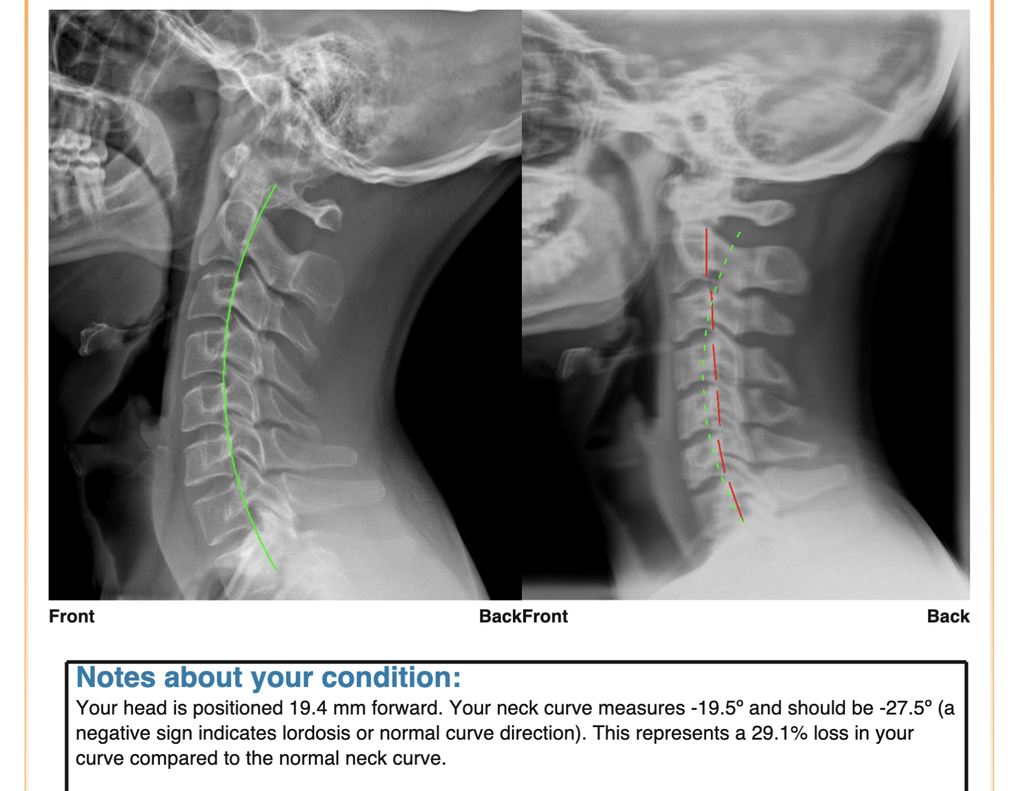
He reported his chest feeling tight and there being a constant knot in his traps, as well. He reported his arm feeling heavy and a lack of ‘smooth’ motion when he threw the ball. Not only that, but David presented with a forward head posture and a loss of a normal cervical curve (x-ray below), which limited the amount of space available to the nerves as they left the spinal cord. Added up, his symptoms pointed directly towards ongoing TOS, even after the surgery to relieve the nerve issues.
Even though he had the surgery done, he still had yet to deal with the root cause of his nerve issues.
How We Got His Arm Working Again
Our plan with David had three parts:
- Open up the space. Chiropractic adjustments to his full-spine, neck, and upper back, plus neck exercise band work at home to restore the curve in his neck and bring his head back over his shoulders.
- Retrain the muscles. NeuFit sessions with the Neubie to get his shoulder blade stabilizers firing again, so they hold the shoulder blade in place instead of letting it tip forward. The tops of his shoulder, his traps, and the front of his shoulders (his pec muscles) all mapped as ‘hot spots’ that were not firing correctly.
- Rebuild his throwing tolerance. In ideal situations, David could have taken time off before throwing more, but since David was “in-season” and already throwing, he started to build to his longer throws of up to 40-50 yards. He continued with his team’s required strength work as well.
He came in 2 times a week for 4 weeks, then tapered down as he got stronger.
Back to Live Reps in 4 Weeks
By week 1, David felt some relief from his nerve symptoms in his hand. By week 2, he started reporting his shoulder moving freely and quickly, being able to hit further routes with more accuracy.
By week 4, David was taking live reps and able to ramp up the amount of throws he was able to make without the usual accompanying soreness.
By week 8, he reported being able to play in live reps without thinking about his shoulder, giving him the ability to just go and play. He reports, ‘My shoulder feels free and snappy, and I’m actually able to put the ball where I want. It’s been so long since I’ve felt this way throwing the ball.’
Signs Your Arm Pain Might Be Coming From Your Neck or Shoulder
- Your elbow and shoulder imaging came back clean, but the symptoms keep coming back
- Numbness or heaviness that builds with more throws
- Symptoms that get worse with your arm overhead (serving, swimming, reaching)
- Velocity or command dropping with no clear injury
Questions Young Athletes Ask About TOS
Do I need surgery for thoracic outlet syndrome?
Many athletes with the nerve-related type do well with conservative care first. Surgery is sometimes needed, especially for the vascular type, and if I see signs of that I’ll refer you to a physician right away.
Can I keep throwing while we work on it?
Usually in a modified way. Shutting down completely isn’t always necessary, but pushing through numbness usually makes it last longer.
Do you work with other overhead athletes?
Yes. We have extensive experience with overhead athletes and have seen almost all manners of overhead shoulder and elbow injuries resulting from repetitive and explosive motions overhead.
Get Your Arm Checked in Sarasota
If your arm goes numb, heavy or weak as the innings go on, it’s worth finding out where it’s actually coming from. Schedule a visit with Dr. Alex Lee at Circadian Chiropractic & Sport, at the corner of 17th & Honore.
Shared with the patient’s permission. Some details changed for privacy.